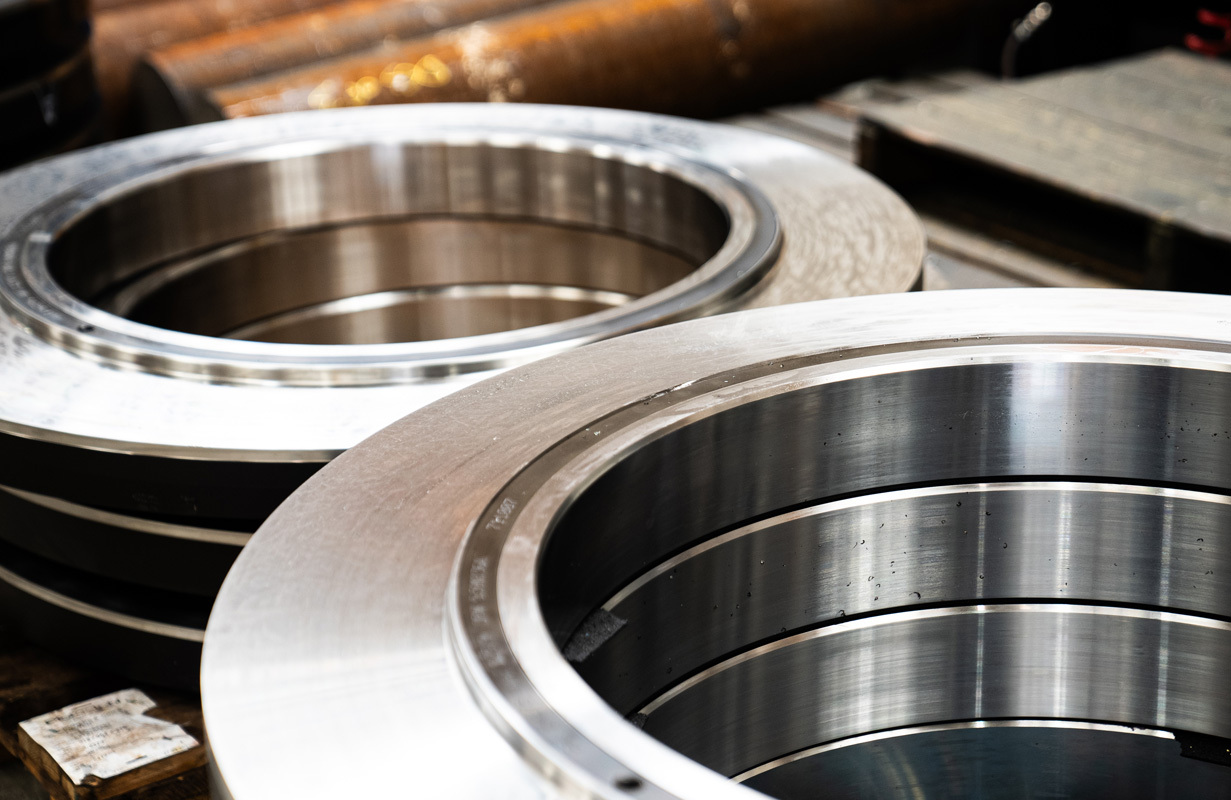
For seven decades, Bowers & Jones has operated as a leading force in the design, manufacture, and refurbishment of roll form tooling and rolling mill components. Operating from our Bilston premises in the West Midlands, our heritage is built on manipulating robust metals to exact tolerances. However, modern engineering requires continuous adaptation. As industries evolve and component requirements become stricter, our manufacturing capabilities must expand to meet these bespoke demands.
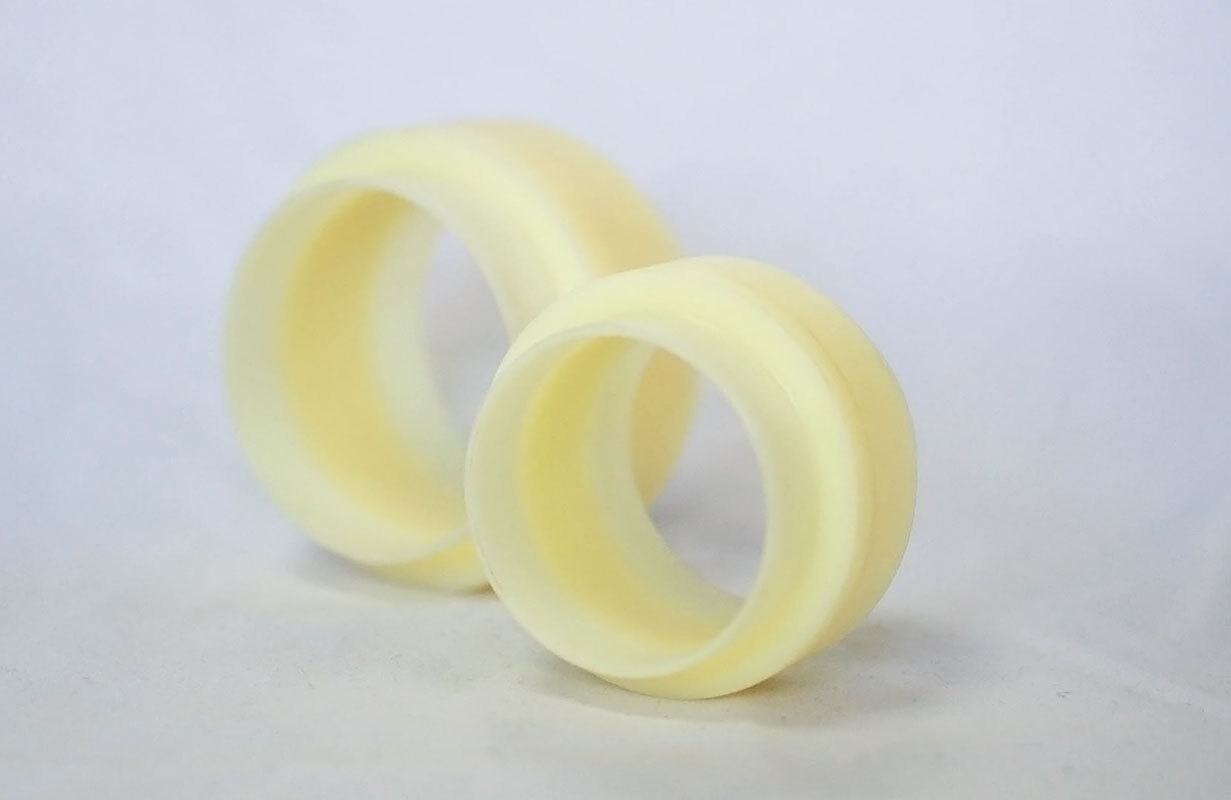
Recently, we have introduced a new material discipline into our production portfolio. We are now engineering high-performance nylon rings for aerospace applications. This development directly addresses the critical industry requirements for eliminating Foreign Object Debris (FOD) and preventing harmful metal-on-metal contact during aircraft assembly and maintenance.
The Engineering Case Against Metal-on-Metal Contact
Aerospace components (whether constructed from advanced composite materials, aircraft-grade aluminium, or titanium alloys) are subjected to some of the most rigorous stress parameters imaginable. During the assembly, transit, and maintenance of these sensitive components, securing them safely is paramount. Traditionally, metallic retaining rings, fixtures, and location tools have been utilised. Yet, putting metal directly against metal introduces an array of mechanical risks.
When two metallic surfaces interface under pressure or vibration, the resultant friction can induce fretting wear. Over a sustained programme of use, microscopic particles of metal shear away from the tool or the component. This creates immediate contamination risks within cleanroom environments or precision sub-assemblies. Furthermore, dissimilar metals interacting can accelerate galvanic corrosion, compromising the structural integrity of flight-critical parts.
By transitioning to nylon rings for aerospace, engineers can entirely remove the risk of galvanic corrosion and surface scratching. The relatively low modulus of elasticity inherent in high-grade engineered polyamides allows the ring to absorb shock and vibrational loads without transferring destructive kinetic energy to the primary aerospace component.
Comparing Metal and Nylon in Assembly Fixtures
To fully appreciate the advantages of engineered polymers, it is useful to evaluate their characteristics directly against traditional metallic tooling:
- FOD Risk: Metallic rings present a high risk, often creating sharp shrapnel upon failure. Conversely, nylon offers a low risk, as it is designed to fracture safely without producing dangerous shards.
- Surface Wear: Metal tools carry a high risk of scoring and fretting against delicate aerospace parts. Nylon eliminates metal-on-metal contact entirely, preserving the surface integrity of the parent component.
- Galvanic Corrosion: Traditional metallic retaining rings can promote bi-metallic corrosion when interfacing with different alloys. Engineered nylon is chemically inert, neutralising this threat completely.
- Weight Profile: Metal fixtures are inherently heavy. Nylon provides an exceptional strength-to-weight ratio, making handling and assembly processes significantly more efficient and safer for engineers.
Eradicating Foreign Object Debris Risks
Foreign Object Debris is a constant threat in the aviation and aerospace manufacturing sectors. FOD encompasses any loose item, material, or debris that can potentially cause damage to an aircraft or its internal systems.
Key forms of dangerous FOD include:
- Metallic swarf from worn tooling
- Snapped metal retaining clips
- Sheared bolts or fasteners
If a fragmented piece of a metallic locating ring enters an engine turbine or a hydraulic actuator housing, the resulting catastrophic failure could cost millions of pounds or compromise flight safety.
Our specialist engineering team recognised that mitigating FOD requires a preventative approach at the tooling and component handling stages. Polymer-based solutions provide an inherent safety net. If a nylon component is subjected to forces beyond its yield strength, it behaves differently to hardened steel or brass. Engineered nylon fractures without creating the sharp, jagged shrapnel associated with metallic failure. The material is also significantly lighter.
The integration of precision-machined nylon rings for aerospace into production lines drastically reduces the potential for metallic particulate generation. Quality control operators and plant managers can therefore maintain a cleaner, safer assembly environment that complies with stringent global aviation regulations.
Material Properties of Engineered Polyamides
Why specifically choose nylon over other industrial polymers? The decision rests heavily on the required mechanical properties. Engineered polyamides exhibit an exceptional strength-to-weight ratio, making them ideal for heavy-duty industrial applications where weight reduction is simultaneously desired. Nylon offers excellent resistance to abrasion, chemical solvents, aircraft hydraulic fluids, and aviation fuels. This chemical inertness ensures that the rings do not degrade or become brittle when exposed to the harsh operational fluids common in aerospace hangars and manufacturing works.
Furthermore, nylon possesses natural self-lubricating properties. In applications where a ring must slide over a delicate shaft or locate within a tight bore, this low coefficient of friction is invaluable. It ensures the ring can be seated and removed repeatedly without aggressive force, protecting the parent material from scoring. To optimise the performance of these components, our engineers meticulously select specific grades of nylon (such as Cast Nylon 6 or Nylon 66) depending on the exact load-bearing requirements and environmental exposure the part will endure.
Thermal and Dimensional Considerations in Polymer Machining
Machining polyamides requires a distinct set of engineering rules compared to machining carbon steel or bronze. When creating precise components for the aviation sector, thermal expansion is a critical metric. Nylon has a higher coefficient of thermal expansion than metallic alloys. Therefore, when designing rings that will operate within temperature-variable environments, our engineers must calculate precise dimensional clearances. If a polymer ring is machined to an exact net fit at room temperature, it may bind or seize upon a titanium shaft when exposed to the high ambient heat of a functional test rig.
To counteract this, we employ rigorous environmental controls during the manufacturing process. The raw nylon billets are allowed to acclimatise to the ambient temperature of our Bilston site before turning operations commence. Furthermore, the aggressive application of specialised coolants during the CNC milling process prevents localised heat build-up. Heat generation at the cutting face can cause the plastic to warp, melt, or deviate from the specified tolerances. By strictly controlling the cutting parameters (utilising sharp, high-positive rake tooling and optimised feed rates), we ensure every completed batch retains absolute dimensional stability.
Applying West Midlands Precision to Polymers
Expanding our manufacturing portfolio to include advanced polymer machining alongside our renowned heavy roll form tooling is a deliberate act of engineering innovation. We are actively broadening our horizons to solve complex problems for the modern aviation sector, whilst remaining fiercely committed to our traditional metal forming roots. The fundamental principles of high-precision engineering remain identical across both disciplines. The rigorous dimensional tolerances we apply to rolling mill equipment are the exact same standards we demand when machining plastics. At Bowers & Jones, we utilise state-of-the-art CNC turning and milling centres to manufacture these aerospace components.
Because polymers react differently to cutting forces and heat generation compared to steel or copper alloys, our machinists have adapted their feed rates, tooling geometries, and coolant strategies to ensure perfect surface finishes on every batch. You can review the full scope of our expanding capabilities by visiting our Subcontract Machining page on our website.
We take pride in offering these highly specialised, innovative services. Our ISO 9001:2015 certification underpins every process within our Bilston premises, guaranteeing complete traceability and quality assurance from the initial material billet through to final inspection. For highly regulated sectors, maintaining a robust Quality Management System is non-negotiable. Information regarding these international standards and their strict application in manufacturing can be found through independent resources provided by the BSI Group.
Global Reach and Bespoke Design Consultancy
While our roots are firmly planted in the West Midlands, our operational footprint is global. We regularly supply complex engineering components to partners across the UK, the US, Germany, Italy, and further afield. Supplying nylon rings for aerospace represents a natural extension of our commitment to solving complex engineering problems for an international client base.
Every aerospace project brings unique geometric constraints and load parameters. A standard, off-the-shelf polymer ring is rarely sufficient for highly specialised aircraft assemblies. This is where our technical expertise provides substantial value. Our engineering team collaborates directly with aerospace procurement managers and plant operators to design bespoke retaining and locating rings. We calculate the required thermal expansion clearances, considering that nylon expands at a different rate to metal when subjected to extreme temperature fluctuations. We also assess the compressive loads the ring must endure to ensure dimensional stability over its operational lifespan.
Future-Proofing Aerospace Manufacturing
The aerospace industry is on a continuous trajectory towards lighter materials, tighter tolerances, and absolute safety assurance. Tools and components that interface with flight hardware must evolve at the same pace. By eliminating metal-on-metal contact, we are helping manufacturers protect their highly valuable assets during the production phase. The prevention of FOD and the elimination of surface scoring translate directly into reduced scrap rates, fewer failed non-destructive testing inspections, and higher overall production efficiency.
We remain dedicated to advancing our production techniques and innovating our service offerings. Integrating high-grade polymers into our repertoire ensures we can support our clients comprehensively. Whether you require robust steel rollers for metal forming or precise nylon rings for aerospace to protect critical assemblies, Bowers & Jones has the technical infrastructure and the engineering pedigree to deliver exact results.
Partner with Bowers & Jones
Are you looking to eliminate metal-on-metal wear and eradicate FOD risks within your assembly operations? Our technical team is ready to assist. We offer comprehensive design and manufacturing services for bespoke nylon rings for aerospace, engineered to your exact specifications.
Get in touch with us today to discuss your project requirements, request a consultation, or learn more about our advanced polymer machining capabilities. Contact Bowers & Jones to secure the precision and quality your aerospace operations demand.